

Can a Hotel Design How a Guest Wants to Feel?
For years, hotels have asked familiar questions.
Where does the guest want to travel?
What room will they choose?
What services matter most?
What will make the stay more convenient?
But a new question is becoming increasingly important:
How does the guest want to feel?
Booking.com’s 2027 Travel Predictions found that 81% of global travellers would choose a destination primarily according to how they want to feel. More than three quarters would even consider using a tool that suggested destinations based on their mood.
That shift is interesting because it moves travel beyond geography.
A destination is no longer simply somewhere we go.
It becomes somewhere we go to feel something.
Calmer. More alive. More connected. More adventurous. More private. More inspired.
And if emotion is beginning to influence where guests travel, perhaps hospitality has an opportunity to think much more deliberately about the emotions it creates once they arrive.
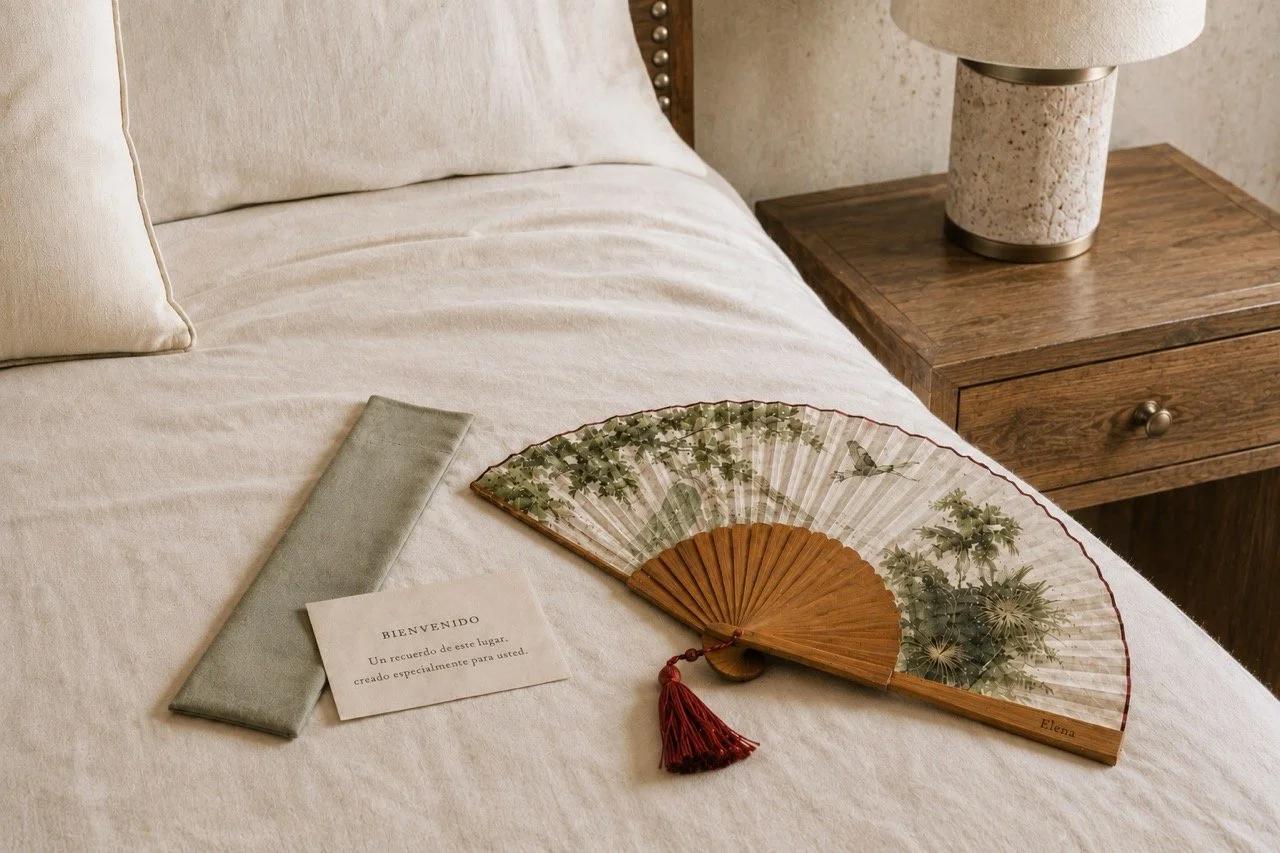
A hotel already designs emotion
The idea may sound abstract, but hotels already do this constantly.
The height of a ceiling changes how a space feels.
The light at sunset changes how a terrace is remembered.
Music alters the pace of a lobby.
The texture of linen, the temperature of stone, the fragrance in a room and even the way an object feels in the hand all contribute to the emotional reading of a property.
None of these elements exists in isolation.
Together, they tell the guest:
This is how this place feels.
The strongest properties understand this intuitively.
A resort surrounded by Mediterranean pine should not feel interchangeable with an urban hotel in Madrid.
A desert retreat should not tell the same story as an island property.
A heritage building should not need to borrow the visual vocabulary of every other luxury hotel.
The opportunity is not to add more design.
It is to create more coherence.
Sense of place is more than an interior
Hospitality often speaks about sense of place through architecture and interiors.
That is essential, but it is only part of the experience.
Guests also encounter a hotel through dozens of smaller moments.
What waits beside the pool.
What they find in the room.
What they touch before dinner.
What accompanies a turn-down ritual.
What is given to them before they leave.
These details may be physically small, but emotionally they can be surprisingly powerful.
The interesting question is not:
What can we personalise with the hotel logo?
It is:
What object, material, colour or ritual genuinely belongs to this place?
That changes the creative process completely.
Instead of starting with a catalogue, the starting point becomes the property itself.
Its landscape.
Its architecture.
Its history.
Its colours.
Its rhythm.
Its guests.
And the feeling the hotel wants them to carry away.
From object to emotional cue
A well-designed object can do something unusual.
It can become an emotional shortcut back to a place.
A colour seen months later.
A particular texture.
A fragrance.
An object brought out of a suitcase or used again at home.
Suddenly, the memory of the property returns.
This is where hotel gifting becomes much more interesting than merchandise.
The object does not have to announce the hotel loudly.
In many cases, the opposite is more powerful.
Its connection to the property can be subtle: a line inspired by the architecture, a colour taken from the landscape, an engraving, a particular textile, a motif guests encountered during the stay.
The value comes from recognition.
I remember where this came from.
That is very different from simply seeing a logo.
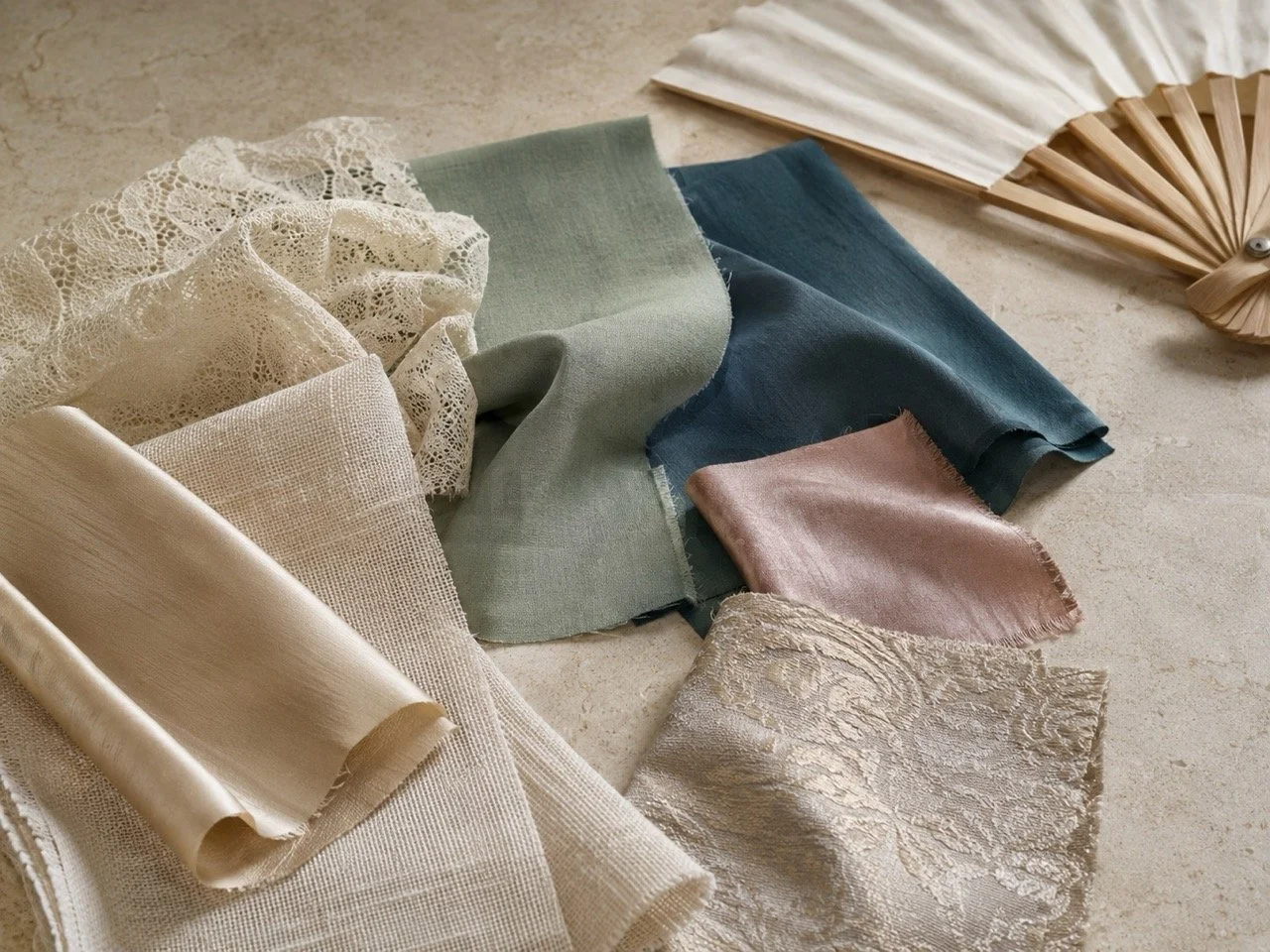
The hand fan as a signature object
For Island Whisper Atelier, the bespoke luxury hand fan remains the signature expression of this philosophy.
It is functional during the stay, particularly in warm destinations. It naturally appears in social moments and photographs. And unlike many conventional hotel amenities, it can continue to be used long after the guest has returned home.
But the important part is not simply the object.
It is why that particular fan belongs to that particular property.
Perhaps the colour direction comes from the surrounding landscape.
Perhaps an architectural detail becomes a subtle engraving.
Perhaps original artwork is developed where the project calls for it.
Perhaps the fan becomes part of a wider guest moment — at the pool, during an event, on arrival or as a farewell piece.
The same creative direction can then extend, where appropriate, into textiles, bags, pouches, sensory details or other objects that belong to the experience.
The collection does not begin with a list of products.
It begins with the place.
Fewer objects. More intention.
There is another implication in Booking.com’s research.
If guests are increasingly travelling according to emotion, hospitality may not need to create more touchpoints.
It may need to create fewer, more meaningful ones.
The guest probably does not remember every object in the room.
But they may remember the one detail that felt completely unexpected and completely right.
The object they actually used.
The colour they associated with the hotel.
The scent they encountered every evening.
The small ritual they had not experienced elsewhere.
This is where guest experience can move beyond personalisation.
Personalisation asks:
How can we put the guest or hotel name on something?
Sense of place asks:
What could exist here and nowhere else?
That is a much harder question.
It is also a much more interesting one.
Designing for memory
Perhaps the next evolution of hotel experience will not simply be about giving guests more choice.
It will be about designing the emotional thread that connects the entire stay.
From arrival to departure.
From space to object.
From object to experience.
And ultimately, from experience to memory.
Because if travellers are beginning to choose destinations according to how they want to feel, the hotels they remember may be the ones that understood how to make that feeling tangible.
First the place. Then the story. Then the object.
And if it works, much later, the memory returns.
Source note: This article was inspired by Booking.com’s 2027 Travel Predictions: Going Off-Script, based on research among 28,230 travellers across 32 markets.