

One Night to Be Remembered: What Shorter Stays Mean for Hotel Guest Experience
What changes when a hotel has one night, rather than four, to become memorable?
Hotels.com’s Unpack ’27 travel trends suggest that shorter stays are becoming part of the way people travel. According to its research, 79% of travellers plan to book a one-night stay in the coming year, rising to 83% among Gen Z and Millennials.
Searches for one-night stays have also increased by almost 10% year over year.
At the same time, another finding caught my attention: 56% of travellers say they have already booked a hotel purely for its atmosphere or aesthetic.
Taken together, these figures raise an interesting question for hospitality.
If guests are spending less time in a property, how quickly can a hotel make them feel something?

A shorter stay creates a smaller window
A guest staying for four or five nights has time to discover a property gradually.
They notice the view at breakfast. The light in the room at a particular hour. The music by the pool. The scent when they return in the evening.
A one-night guest experiences the same hotel differently.
The window is compressed.
Arrival, room, dinner, sleep and departure can happen within less than 24 hours.
That means the identity of the property needs to be felt quickly — not through louder branding, but through clarity.
Atmosphere has to work from the beginning
The fact that travellers are choosing hotels for atmosphere alone is significant.
It suggests that the hotel itself is increasingly part of the destination.
Architecture, interiors, landscape, colour, sound and scent are no longer simply a backdrop to the stay. They are part of the reason for booking it.
For a hotel, that makes a strong sense of place even more valuable.
The guest should understand something about where they are almost immediately.
Small details have less time — and more work to do
When a stay becomes shorter, the smaller touchpoints become more important.
What is waiting in the room?
What does the guest use by the pool?
Is there a detail connected to the destination?
Does the evening ritual feel like it could happen anywhere, or only here?
A considered guest experience does not require filling a room with objects.
It requires choosing the right ones.
The most effective details often work quietly, reinforcing the identity of the property without feeling promotional.
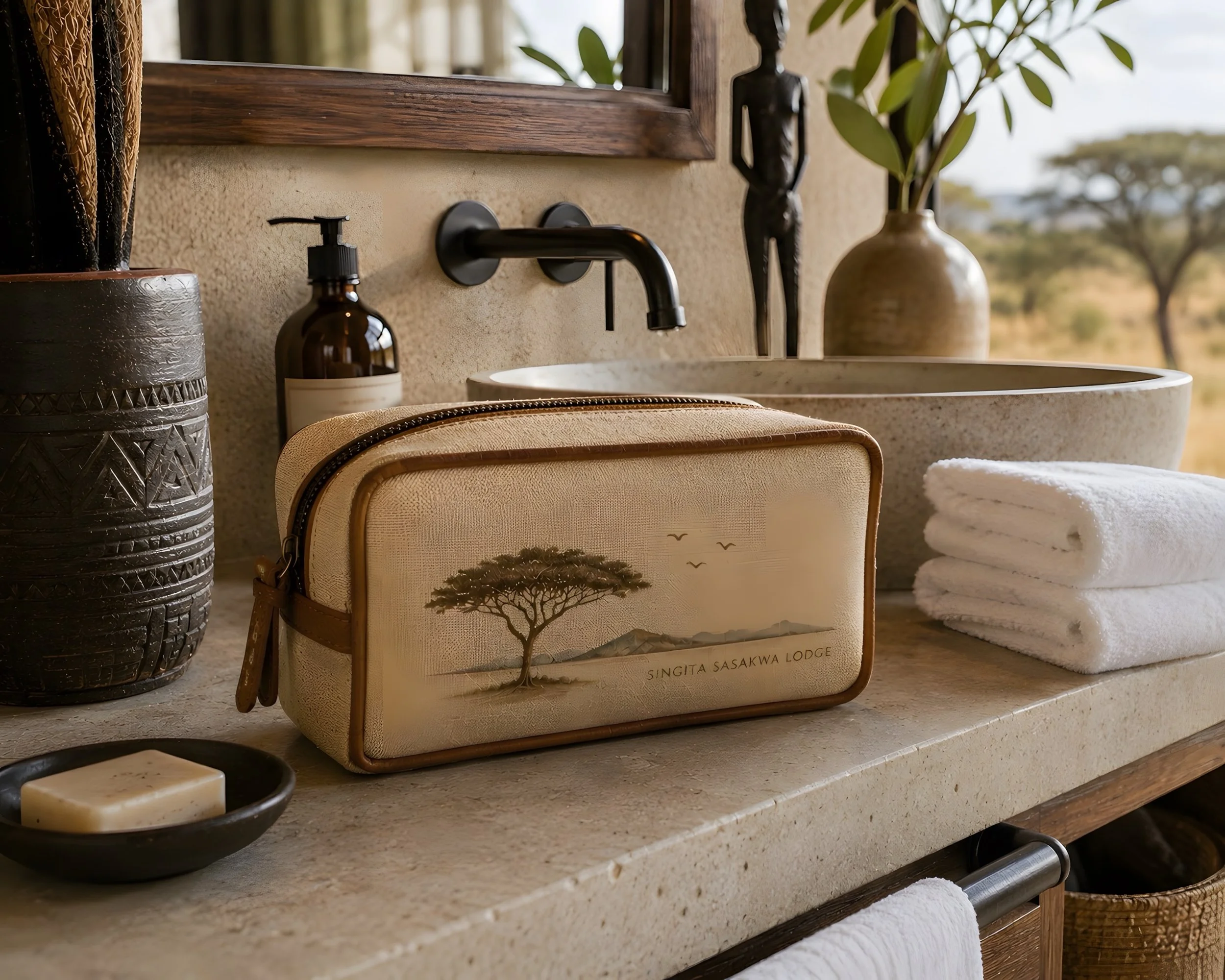
An object can extend the stay
There is something particularly interesting about an object that leaves the hotel with the guest.
The stay may have lasted one night.
The object may remain for years.
That is why hotel gifting becomes more interesting when it is considered as part of the guest experience rather than as a final transaction.
A bespoke hand fan, a textile, a small sensory object or another useful piece can become a physical connection to the property long after checkout.
But only when it genuinely belongs to the story of that place.
Otherwise, it is simply another object.
Fewer touchpoints. More intention.
Shorter stays do not mean hotels need to do more.
They may mean the opposite.
A distinctive arrival.
One memorable object.
A sensory detail that belongs to the property.
A moment that feels specific to that destination.
The objective is not to make every touchpoint remarkable.
It is to decide which ones deserve to be.
Memory is not measured in nights
A memorable hotel experience does not necessarily require a long stay.
Sometimes one evening, one room, one particular light or one unexpected detail is enough.
The challenge for hospitality is to create a property with enough identity that even a short encounter leaves something behind.
Because perhaps the length of the stay matters less than the strength of the memory.
One night can still be enough.
Frequently Asked Questions
Why are one-night hotel stays becoming more relevant for guest experience?
Shorter stays give hotels less time to communicate their identity. This makes atmosphere, sense of place and carefully chosen guest touchpoints more important from the moment of arrival.
How can a hotel create a memorable experience during a short stay?
A memorable short stay does not require more objects or more branding. A clear atmosphere, a distinctive arrival, relevant sensory details and a few carefully chosen touchpoints can create a stronger impression.
Can hotel gifting extend the guest experience after checkout?
Yes. When a useful object is genuinely connected to the property, destination or story, it can continue to remind the guest of the stay long after they leave.
What kinds of objects can become part of a hotel guest experience?
Depending on the property, this might include a bespoke hand fan, textile, bag, sensory detail or another useful object developed specifically around the hotel’s identity and guest experience.
Source note
This article was inspired by Expedia, Hotels.com and Vrbo’s Unpack ’27 travel trends. Hotels.com reports that 79% of travellers plan to book a one-night stay in the coming year and that searches for one-night stays have increased by nearly 10% year over year. The research also reports that 56% of travellers have booked a hotel for its atmosphere or aesthetic alone. Third-party research was conducted by OnePoll among 26,000 adults across 16 countries.