

Guests do not experience a hotel department by department. They do not separate procurement from housekeeping, spa operations from creative direction, or poolside service from the wider property. They remember a room, a texture, a welcome gesture and the feeling of being somewhere unmistakable.
Yet the products that shape these moments are often specified separately: robes from one source, slippers from another, pool towels and bags on another timetable, and VIP amenities as an independent purchase.
What if a hotel developed a bespoke guest collection from one creative direction, connecting these different objects without making them identical?
At Island Whisper Atelier, the starting point is the property and the intended experience. Only then do we consider which objects can bring it to life.
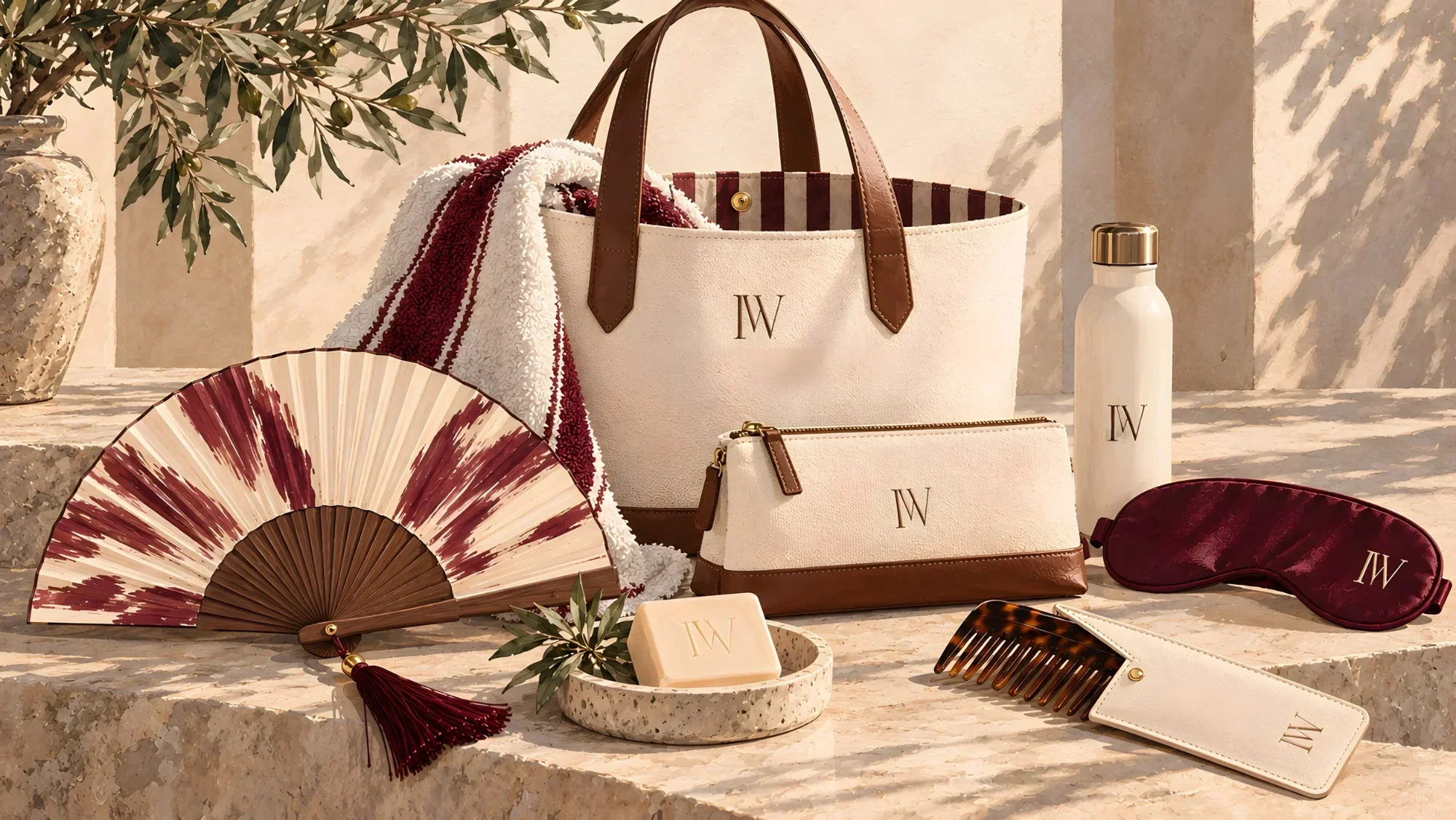
A coordinated collection is not a catalogue with matching logos
A collection does not become cohesive simply because each product displays the same branding. Nor must every piece repeat one print or one colour.
A shared visual language might come from an original illustration, the texture of a material, a restrained palette, a recognisable proportion or an architectural detail. A hand fan could interpret local flora in watercolour. A resort bag might echo a material associated with the destination. A kimono could carry an architectural line through its piping.
Each piece should make sense independently and still belong to the same world.
Start with the property, not the product list
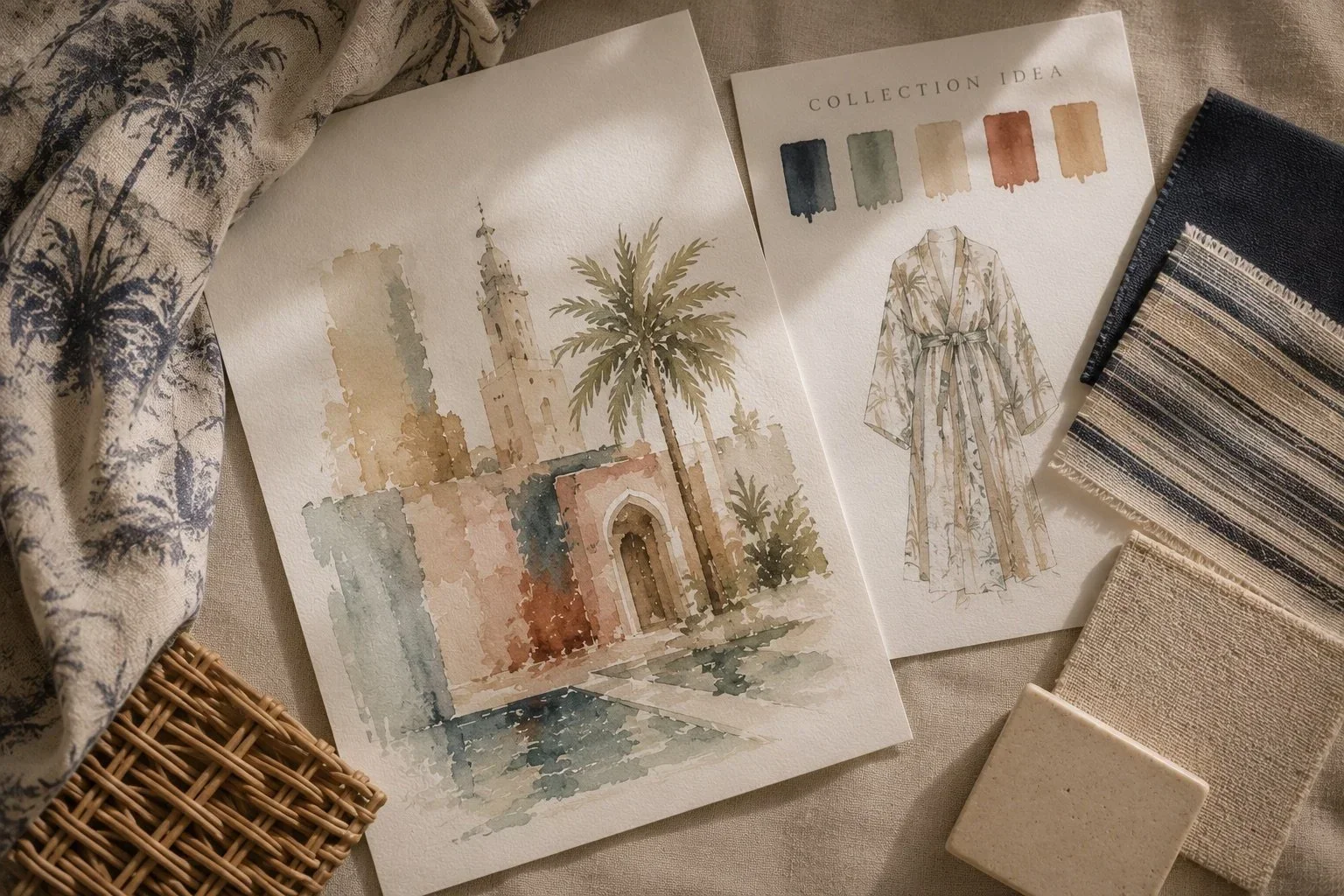
Before choosing luxury hotel amenities, study the hotel's architecture, interiors, setting, heritage, landscape and atmosphere. Consider how the destination feels at different times of day, and which references are truly connected to the property rather than decorative clichés.
Then consider the guest. A city hotel hosting short business stays and a coastal resort welcoming families may need very different objects.
The first creative question is not “What can we produce?” but “What should a guest feel or remember, and which moments can express that intention?”
Guest room and bath: design within everyday routines
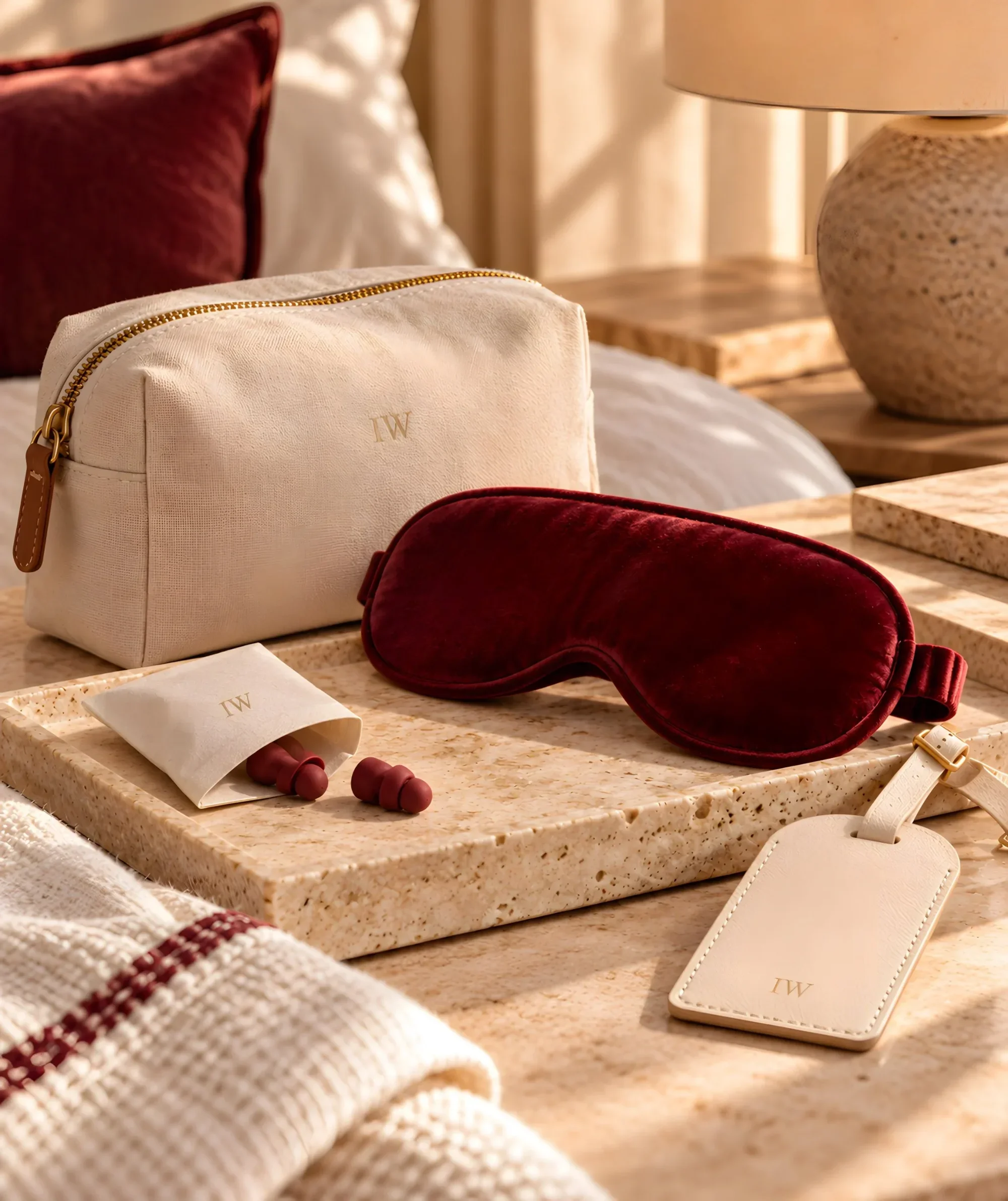
Robes, kimonos, slippers, sleep accessories, textile pouches and carefully selected room details can communicate a property's identity without becoming overly branded.
A sleep set, for example, does not need to contain many products. A few practical pieces, specified for comfort, hygiene and housekeeping, may create a more refined impression than an elaborate assortment with limited usefulness.
The aim is not to place more products in the room. It is to make the details that guests genuinely use feel considered.
Pool, beach and resort: extend the creative language outdoors
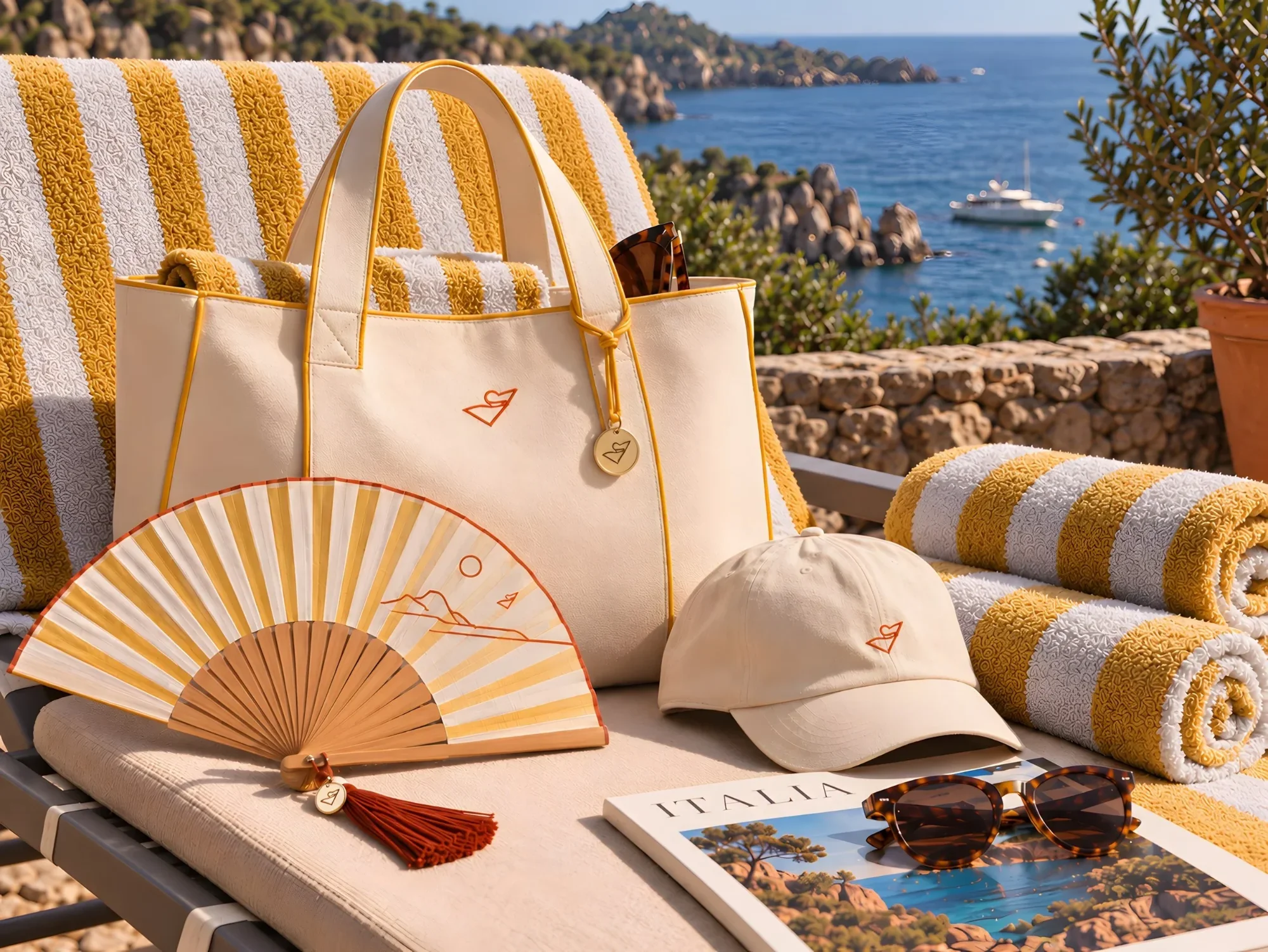
At a resort, guest life moves naturally between the room, pool, beach and terrace. Custom hotel towels, pareos, resort bags and bespoke hand fans can be designed for these different situations.
Here, practical specifications are essential: fabric performance, drying time, ease of care, dimensions, closures, weight, climate and the way an item will be carried.
A pool towel is not the same product as a lightweight pareo. An in-room-use accessory and an item intended for boutique retail may require different finishes and labelling. Designing around use makes the result more convincing.
Spa and wellness: sensory design with operational discipline
Wellness environments are shaped by touch, weight, softness, atmosphere and visual restraint. A coherent spa collection may be built around a feeling of calm, lightness or connection with its surroundings rather than simply a matching colour.
At the same time, hygiene, maintenance and technical suitability remain central. Cosmetics, soaps and fragrance products have regulatory considerations that differ from textile goods. Any such category should be assessed according to the relevant market, product classification, required testing and compliance responsibilities rather than treated as a routine extension of a textile order.
Arrival, VIP moments and farewell: choose the right touchpoint
Not every guest item needs to be waiting in the room on arrival. Some objects work best as a welcome detail, some during an experience, and others for a specific celebration or VIP moment.
A bespoke hand fan might be used during a warm afternoon or special event. A travel pouch could accompany an excursion. A subtle arrival piece can introduce the property's design language without functioning as conventional promotional merchandise.
The central test remains simple: Will the guest actually want to use it? If not, it may not be the right object.
One creative direction, several production realities
Developing a collection involves creative direction, artwork, product specifications, sampling, material selection, approvals, testing where required, production, packing and shipping.
Different product categories rarely have identical manufacturing lead times, minimum quantities or compliance needs. A bespoke collection involving several production partners may require considerably more planning than a single item.
A shared creative direction can hold the collection together. It does not remove the need to examine the commercial and technical feasibility of each product.
Hotel openings and renovations: plan the guest details early
An opening is an opportunity to define a coherent guest experience before products become urgent purchase orders.
It helps to distinguish essential opening-day items, pieces for a later phase, special VIP details and any future boutique collection. Internal approvals may involve procurement, operations, housekeeping, brand, design and guest experience teams.
Early briefing, realistic sampling allowances and clear responsibility for specifications can prevent late changes and fragmented results.
A place can be recognised without its name appearing everywhere
The strongest collections need not announce themselves. Their colours, textures, forms and gestures simply feel right for that particular hotel.
Island Whisper Atelier's signature object is the bespoke hand fan, but the same place-led design approach can inform a kimono, a travel accessory, a poolside piece or a broader guest collection when the project calls for it.
First the place. Then everything else.
Frequently asked questions
What are bespoke hotel amenities?
They are products and objects developed or adapted around a property's identity, guest needs and intended uses, potentially spanning room, spa, pool, VIP and boutique settings.
Does every piece need the hotel's logo?
No. A coherent collection can be created through colour, original artwork, materials, proportions, subtle finishes and references to the destination.
Can one collection involve different suppliers?
Yes. Each category needs its own specifications, samples, production controls and schedule, while a shared creative direction helps maintain consistency.
When should a hotel start planning collections for an opening?
As early as practical, once the intended uses, quantities, budget and opening milestones are known. Sampling, testing and approvals vary by product category.
Does Island Whisper Atelier create more than hand fans?
Yes. Bespoke hand fans remain our signature piece, while our place-led creative approach can extend to textiles, accessories and coordinated hospitality collections according to the brief.
Create a collection rooted in your property
Planning a hotel opening, renovation or new guest experience? We can begin with the property's story, guest journey and the pieces that genuinely deserve a place within it.