

Some objects are so familiar in a luxury hotel room that we barely notice them. They are comfortable, functional and part of what we expect from a considered stay. But familiarity also creates an opportunity.
What if a hotel bathrobe could say something about the property without relying on a prominent embroidered logo? What if the silhouette, trim or colour palette felt as though it could belong nowhere else?
A luxury hotel bathrobe can be more than a practical textile. A bespoke hotel kimono can take that idea in a different direction: a carefully designed garment that becomes part of the guest's experience of the room and of the property's visual identity.
At Island Whisper Atelier, that conversation begins with the place, the property and the intended guest experience—not a predefined product catalogue.
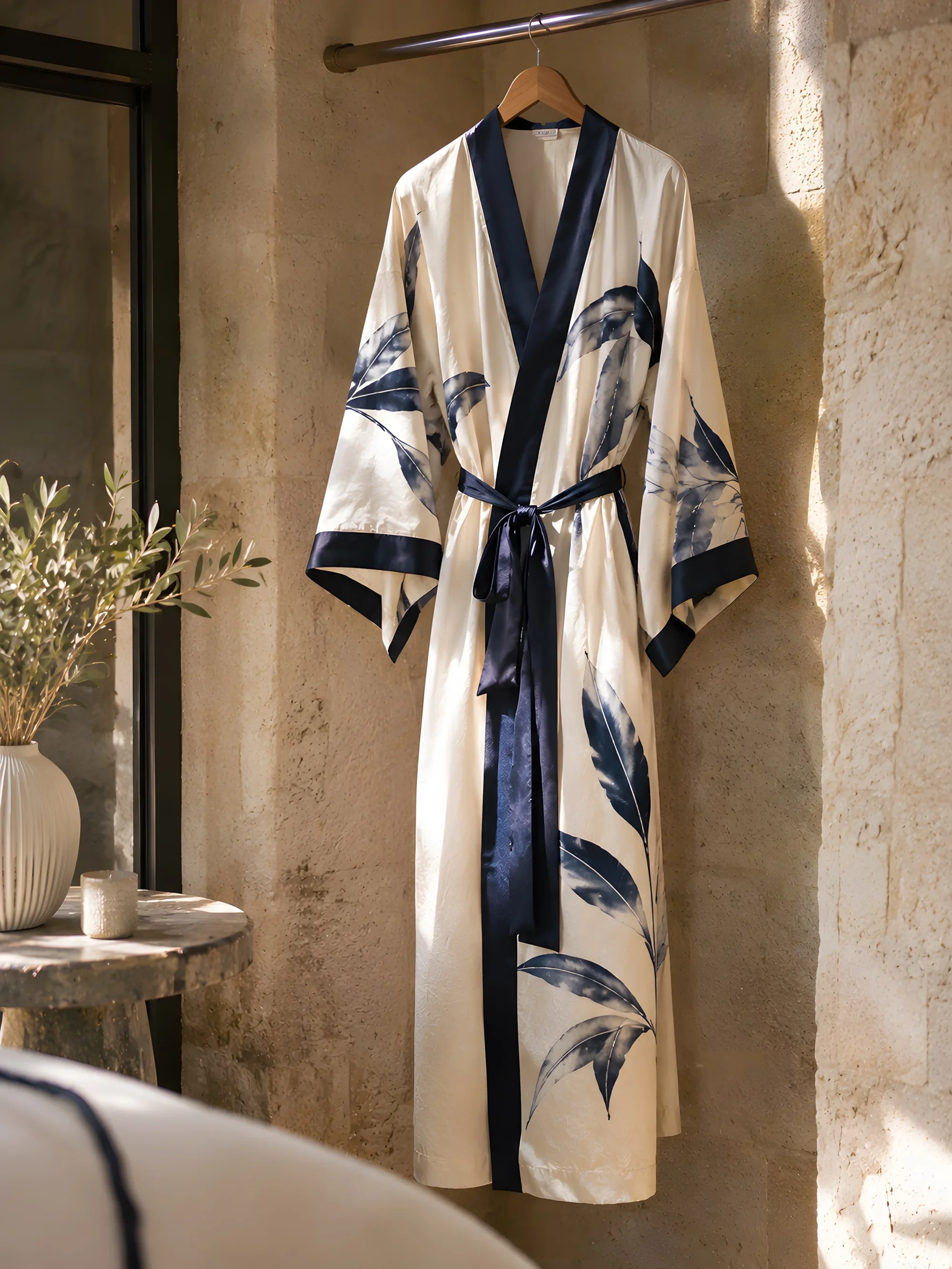
Bathrobe or kimono? Start with its purpose
A traditional bathrobe and a hotel kimono are not necessarily interchangeable. Each offers a different opportunity.
A bathrobe is often intended for use after bathing, in the spa or beside a pool. Absorbency, comfort, weight, laundering and longevity are central to the specification. A suitable terry construction may be essential.
A hotel kimono can be conceived as a lighter room garment, with particular attention to silhouette, drape and ease of movement. Depending on a hotel's policies and setting, it might be worn within a suite or during certain private resort moments. It does not need to replace a functional bathroom robe; it may complement one.
Before selecting materials or decorative details, define the actual role of the garment.
Material is part of the guest experience
A beautiful photograph alone cannot tell us how a garment behaves after repeated use. Textiles are experienced against the skin and maintained by people working behind the scenes.
For a bath or spa robe, relevant considerations include absorbency, drying time, softness, shrinkage, repeated laundering and colour performance. For a room kimono, the priority may shift towards drape, opacity, breathability, comfort and the way seams and hems hold their form.
Cotton terry, waffle constructions, blended fabrics and lighter woven materials offer different properties. None is universally right for luxury hospitality. Climate, guest profile, laundry operations, usage frequency and desired silhouette all matter.
Physical samples should be assessed before production, including wear, fit and appropriate laundering tests. Good design should work as well operationally as it does visually.
Beyond logo embroidery: what can be made bespoke?
A hotel name embroidered discreetly can be an elegant finishing touch. It should not be the entire creative brief.
Other choices may communicate identity more naturally: contrast piping, a distinctive belt, an understated pattern, the placement of a motif, an internal label, careful proportions or a colour story drawn from the property. Often restraint creates the strongest impression.
Imagine a Mediterranean hotel defined by clean architectural lines. A possible direction might explore ivory fabric, deep-blue or terracotta detailing and a controlled asymmetry inspired by the architecture. This is an illustrative design idea—not a claim about a completed commission.
The objective is not simply to decorate an existing garment. It is to design something that belongs to its setting.
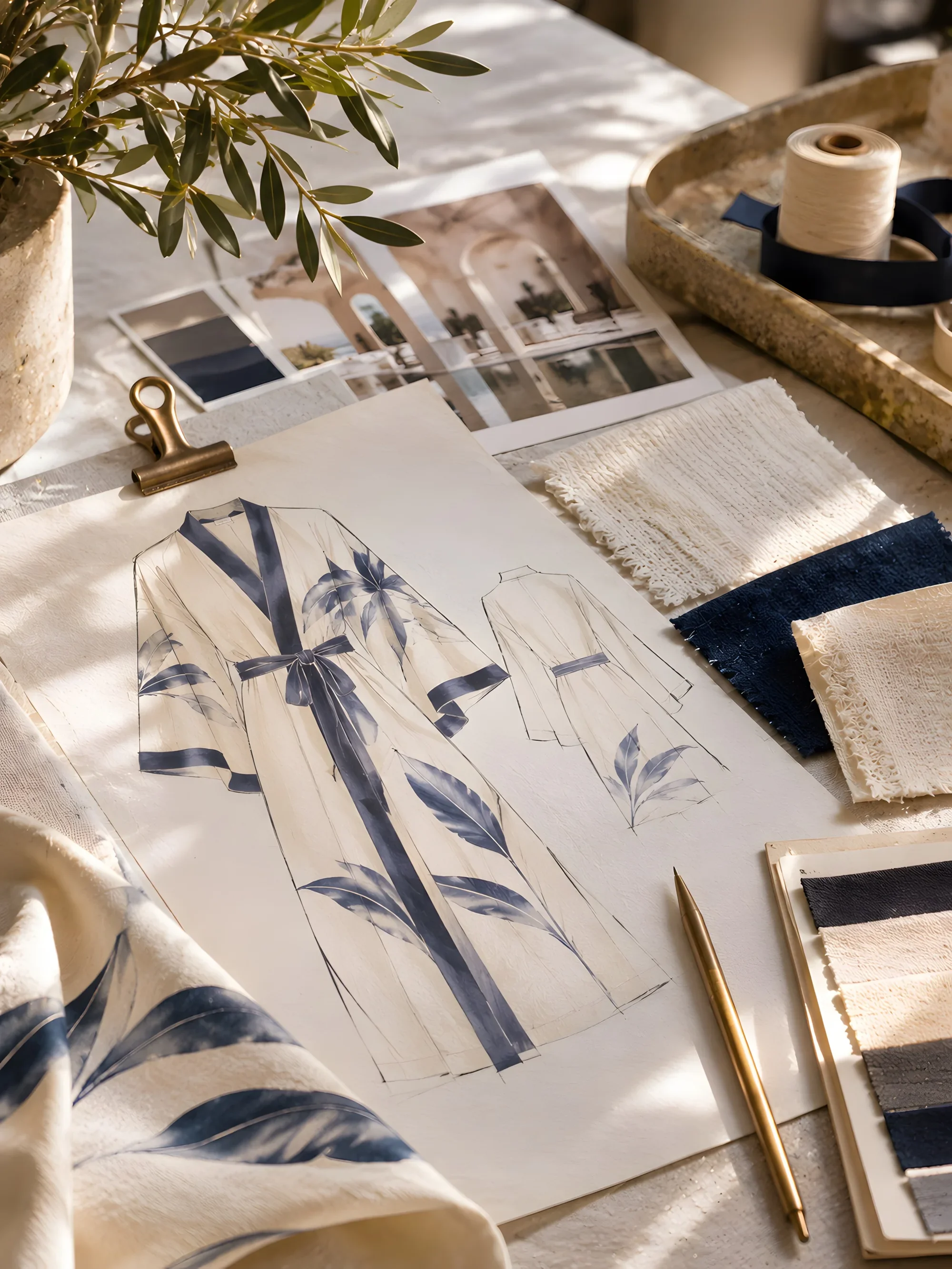
From suite garment to boutique edition
There is an important distinction between a garment provided for use during a stay and a product the hotel chooses to offer for sale.
A room kimono must work for guests and housekeeping: fit, comfort, durability, cleaning and replacement are fundamental. A retail edition introduces further requirements, including commercial sizing, labels, packaging and presentation. The two may share the same visual language while using different specifications.
For this reason, a bespoke hotel kimono should not automatically be described as a take-home gift. A boutique version is a separate opportunity to discuss with the property, not an assumption.
The specification questions that matter
Before commissioning a luxury robe or kimono, the hotel team should clarify the intended moment of use, guest profile, size range, fabric characteristics, maintenance regime, trim and branding requirements, quantities, budget and timeline.
Sampling, approvals, production, shipping and any applicable testing or labelling obligations also need to be considered. Fabric performance should never be claimed without suitable evidence.
This operational detail is not separate from creative work. It is how the creative idea survives real life.
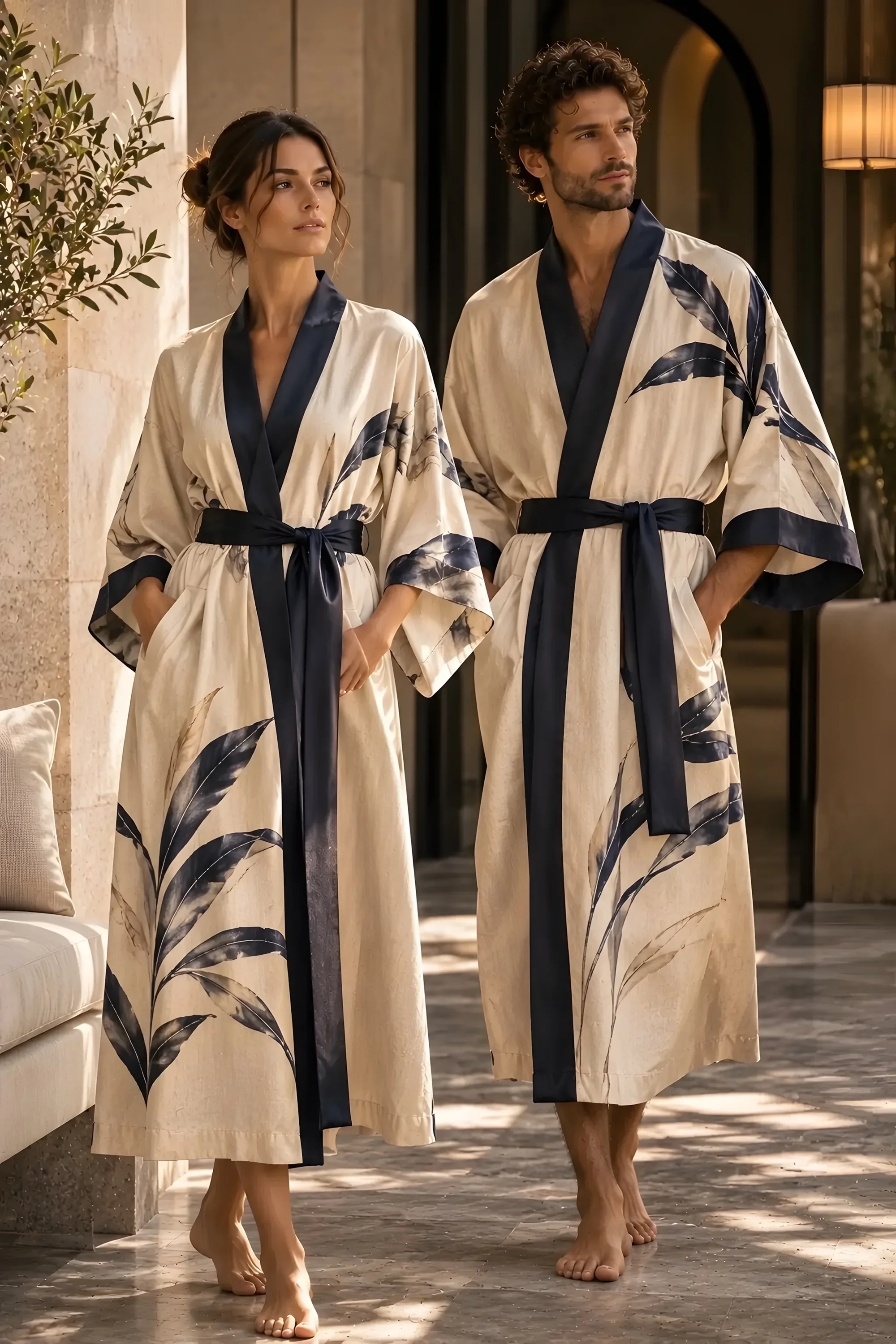
A garment shaped by a sense of place
A hotel can express its identity without repeating its name on every surface. A line from its architecture, a landscape tone, a material texture or a thoughtfully interpreted cultural reference can become the starting point for original design.
Island Whisper Atelier develops creative directions around the property, and—where appropriate—can extend that direction into guest-room textiles, resort pieces and coordinated accessories. Every object should be useful on its own while belonging to a coherent story.
First the place. Then everything else.
Frequently asked questions
What is the difference between a hotel bathrobe and a kimono?
A bathrobe is commonly specified for post-bath use and absorbency. A kimono may be a lighter garment for room use, with greater emphasis on cut, drape and comfort. The right option depends on its purpose.
Can a hotel robe be customised without a large logo?
Yes. Design choices can include piping, colours, a distinctive belt, subtle patterns, labels, small embroidery or refined finishing, subject to material and laundry requirements.
Which fabrics are best for luxury hotel robes?
There is no single answer. Absorbent materials are often important for bathrobes, while room kimonos may call for different textures and drape. Sampling and testing are necessary.
Can a suite kimono also be sold in the hotel boutique?
A separate retail edition can be developed if desired, with appropriate commercial specifications, sizing, packaging and labelling. An in-room garment should not be presented as a complimentary gift by default.
Does Island Whisper Atelier develop bespoke hotel textile designs?
Yes. We develop bespoke designs shaped by each property and coordinate product development and production within the agreed project scope, subject to technical feasibility and specifications.
Discuss a bespoke textile project
Considering custom bathrobes, an authored hotel kimono or a coordinated textile collection? Island Whisper Atelier can explore an approach rooted in your property, your guests and the way each object will be used.