

When a hotel considers bespoke amenities, the conversation often begins with materials, colours and visual details.
Yet equally important questions follow: who will use each product, how frequently will it need replacing, how will it be cleaned, where will it be stored and what will it cost to maintain over time?
A well-considered amenity collection should work for both the guest and the hotel team.
At Island Whisper Atelier, we develop bespoke collections for luxury hotels and resorts, from our signature hand fans to textiles, accessories and distinctive objects for different moments of the stay.
The key is to consider creative decisions alongside operational specifications rather than treating them as separate processes.
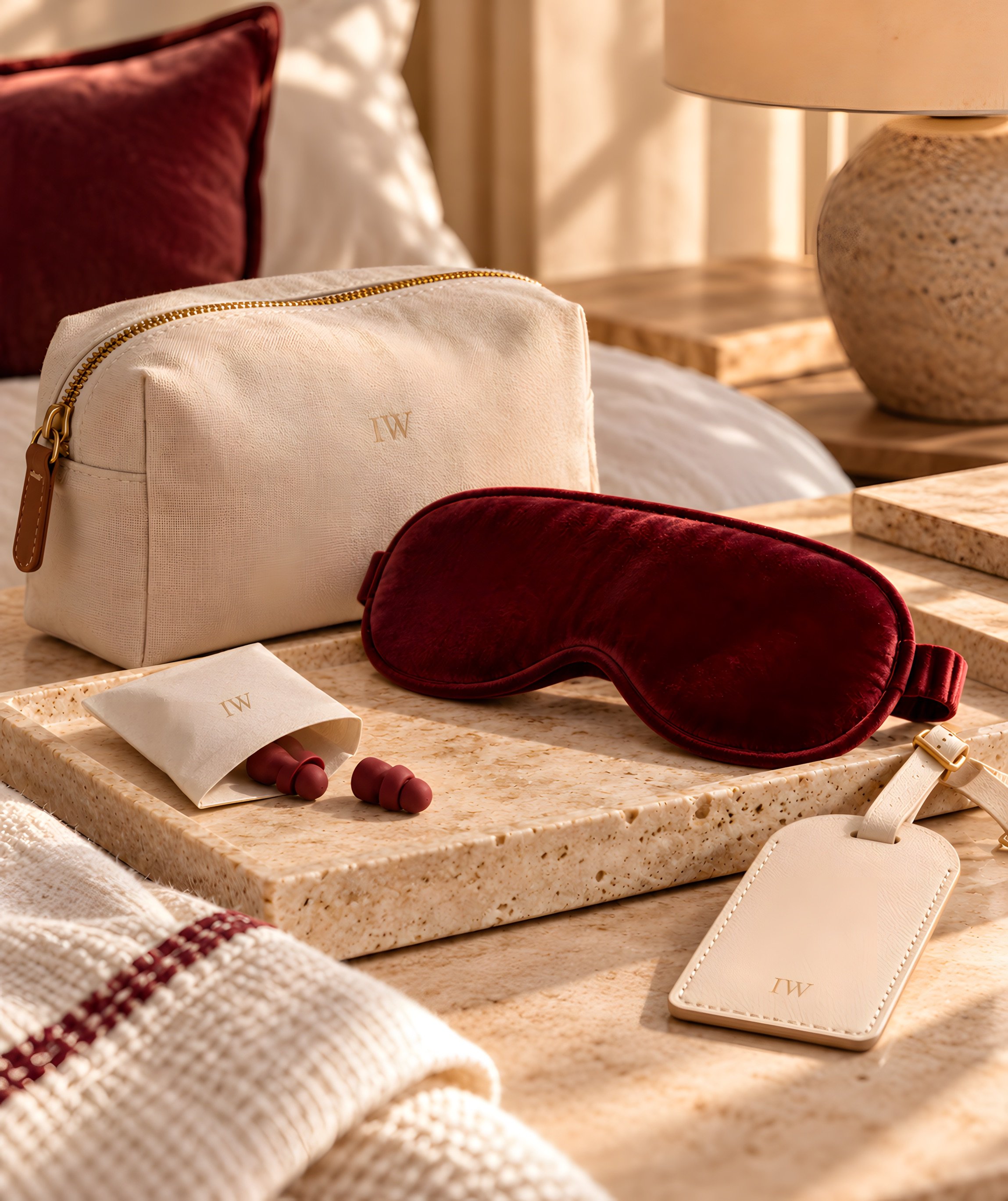
1. Organise products by their intended function
Not every amenity requires the same level of personalisation or replenishment.
A bathrobe or bath towel is part of regular guestroom use.
A pool bag, pareo or hand fan may accompany other moments of the stay.
A signature object for a suite or VIP arrival may serve a different purpose and require individual presentation.
It therefore helps to organise products into functional categories and define the purpose of each.
A hotel should also distinguish between items offered as gifts, provided temporarily for guest use, retained in guestrooms or sold through the property boutique.
This approach supports appropriate budget allocation and product specifications instead of expecting one type of object to meet every requirement.
2. Define material specifications before approving the design
Visual appeal must be evaluated alongside the performance required of each material.
For hotel textiles, composition, dimensions, fabric weight, construction, colour and finishing details may all form part of the specification.
Intended use, laundry procedures and the operational requirements of the property must also be considered.
A finish that looks beautiful on a presentation sample may not be suitable for an item subjected to frequent laundering.
For bags, pouches and accessories, dimensions, stitching, closures, capacity and durability should be evaluated according to their intended function.
If embroidery, labels, piping or specialist finishes are involved, their performance during use and maintenance may require assessment.
These decisions allow personalisation to enhance perceived quality without compromising practicality.
3. Consider lifetime use rather than the first purchase price
Unit price is only one part of a hotel's amenity budget.
For products used repeatedly, initial quantities, replenishment, transport and potential replacement requirements all need consideration.
An item developed for a single event may justify a different investment from one intended for everyday hotel operations.
Creative development, sampling and specialist finishes should also be separated from recurring production costs.
Where repeat orders are expected, agreeing how specifications will be retained and variations managed can help protect consistency.
A useful quotation does not simply compare two factory prices. It compares solutions designed to meet equivalent needs.
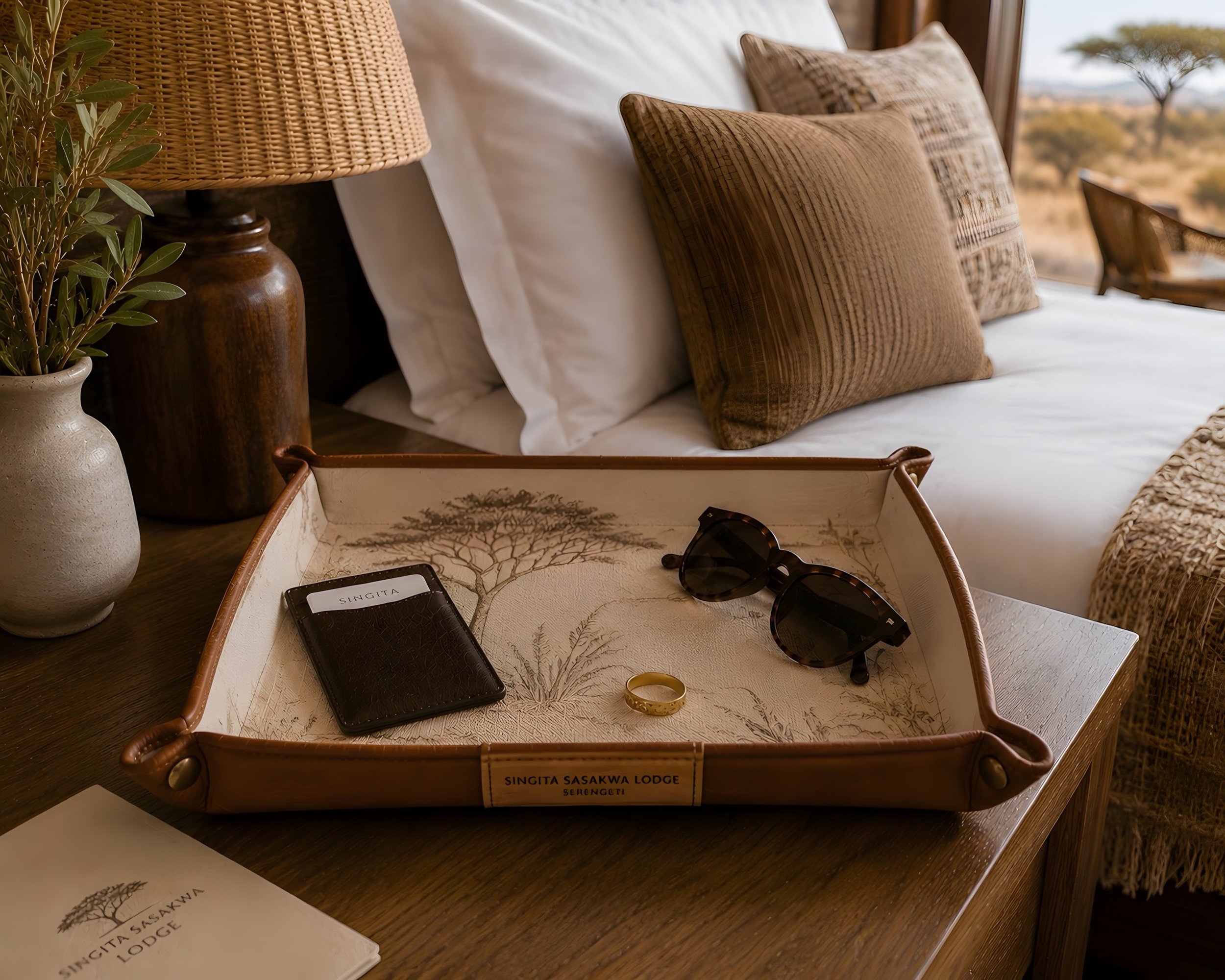
4. Create a recognisable identity without repeating a logo
Personalisation can be expressed through materials, tones, proportions, illustration, engraving or carefully selected details.
A coherent collection does not require identical artwork on every product.
A textile may introduce the property's identity through embroidery or a distinctive colour.
A bag can interpret the same language through its construction, fabric or label.
A hand fan can offer a more artistic expression through original illustration, selected wood and individual finishing details.
Our bespoke luxury hand fans demonstrate how artwork, materials and function can be considered together.
For Thompson Seville, for example, we developed an exclusive hand fan inspired by the city's orange trees, using original watercolour artwork and finishing details created for the hotel.
The objective is not to make every object identical. It is to allow each piece to express the property's identity in a way that suits its function.
5. Approve samples and technical requirements
Samples should validate specific decisions, not simply confirm a colour.
For a textile, this may include dimensions, handle, construction, finishing and suitability for the intended maintenance conditions.
For an accessory, capacity, durability, closures and ease of use may take priority.
Acceptable manufacturing tolerances and the procedure for approving changes should also be established.
Certain categories, including cosmetics, children's products or items intended for food contact, may be subject to specific regulatory requirements depending on the product and destination market.
These requirements must be assessed before committing to production. They cannot be assumed to have been met merely because a supplier provides a sample.
A clear approval process helps reduce differences between the initial proposal and the finished product.
6. Coordinate suppliers, packaging and delivery
Multi-product collections require control of the specifications for every individual reference.
A collection may bring together textiles, accessories and objects produced by different specialists.
That involves coordinating approvals, quantities, packaging, quality checks, documentation and deadlines.
The hotel also needs to understand how products will arrive: by reference, size, colour or in sets prepared for distribution.
For international destinations, transport arrangements, applicable formalities and import responsibilities should be reviewed.
Island Whisper Atelier can coordinate creative development and specialist sourcing according to the agreed project scope, maintaining a consistent direction across different pieces.
Production planning should make the hotel's work easier rather than transferring unnecessary complexity to its teams.
7. Start with a useful selection and expand thoughtfully
A complete collection does not need to be approved all at once.
For some properties, it may be more effective to begin with a signature object and two or three complementary categories.
The first selection can focus on pieces with the strongest practical use, visibility or connection to the guest experience.
Once their performance becomes clearer, the programme may be extended to additional areas, seasons or replenishment needs.
This allows materials, finishes, guest response and operational requirements to be evaluated before adding further references.
Our selected projects illustrate different ways of adapting bespoke objects to particular clients, destinations and uses.
The goal is not to create more items for their own sake, but to develop a collection that makes sense, performs well and can evolve with the property.
Frequently Asked Questions About Bespoke Luxury Hotel Amenities
Which amenities can be personalised for a luxury hotel?
Depending on the project, possibilities may include bath and pool textiles, bathrobes, bags, pouches, guestroom accessories, hand fans, welcome pieces and other distinctive objects. Product selection depends on intended use, technical requirements and the property's identity.
Can textiles be developed from existing hotel specifications?
Yes. A project can begin with dimensions, compositions, fabric weights and technical requirements already defined by the hotel, with appropriate personalisation explored around those specifications.
Does every project require a complete collection?
No. A hotel can begin with one product category or signature object and expand the programme later if appropriate.
How are repeat orders managed?
Approved specifications, required quantities, anticipated frequency and production conditions should be established. Availability and lead times must be confirmed for each subsequent production run.
What if certain products require testing or regulatory documentation?
Requirements depend on the product category, materials and country where the item will be used or marketed. Where applicable, testing, documentation and regulatory responsibilities must be verified before import or commercialisation.
Develop a Bespoke Collection for Your Hotel
If your property is preparing an opening, renovation or new guest amenity programme, we can explore both the creative direction and the practical requirements.
Tell us which products you are considering, the destination country, approximate quantities and any technical specifications already available.
From that brief, we can assess the most suitable development options.