

A hotel opening brings together decisions that must be ready for one specific date: completed rooms, trained teams, available supplies and a guest experience that works from the first arrival.
Bespoke guest-facing objects often involve more stages than expected. A signature hand fan, poolside accessory, textile or welcome piece may require creative development, sampling, approvals and coordinated delivery.
That is why these items deserve a place in the pre-opening schedule rather than being treated as last-minute purchases.
At Island Whisper Atelier, we develop bespoke objects and collections for hotel openings and guest experiences, considering the identity of each property alongside its operational requirements.
This is an indicative six-month planning framework, not a mandatory production timeline. A straightforward single-product commission may move faster, while a technically complex collection can require more time.

1. Six months before opening: establish what is needed
Begin by identifying which moments of the guest stay require a distinctive object.
Before requesting quotations, bring together the people responsible for design, procurement, operations and guest experience.
Clarify which items are intended for guestrooms, suites, pool areas, restaurants, opening events and any potential hotel boutique.
It is also important to distinguish products the property will need continuously from those created specifically for its opening.
A special welcome piece for the first guests does not necessarily require the same replenishment arrangements as pool towels or regularly used room accessories.
Defining these differences early helps prevent unnecessary purchases, late specification changes and operational complications for the hotel team.
2. Four to six months before opening: define the creative direction
A collection should reflect the property while meeting its practical requirements.
Architecture, interiors, landscape, materials and the intended guest experience can all inform the creative brief.
Visual direction must, however, be considered alongside durability, cleaning, comfort, storage and ease of distribution.
A hand fan offered during an outdoor welcome experience requires different considerations from a presentation piece intended for a suite.
Our work with luxury hotels and resorts brings these creative and functional decisions together.
This is the moment to establish a palette, identify priority product categories and decide which elements require original design and which can be developed from existing technical specifications.
A coherent collection does not need to repeat one illustration on every product. Materials, colour, finishes and subtle details can create a recognisable connection between different objects.
3. Four months before opening: estimate quantities by guest category
Quantities should reflect intended use, not just the number of guestrooms.
For a welcome amenity, a hotel may need units for selected room categories or particular guest groups.
A poolside product may require calculations based on daily operations, forecast occupancy, turnover and replacement needs.
Additional pieces may be required for suites, VIP arrivals, opening events or boutique retail.
Prepare a simple product-by-product forecast identifying initial quantity, intended location, receiving department and potential reorder requirements.
Where several designs are involved, each variation should be considered separately when confirming quantities and technical production minimums.
A clear initial inventory supports both creative planning and more reliable procurement decisions.
4. Three to four months before opening: review and approve samples
A digital presentation cannot replace physical sample approval when the product requires it.
Images help confirm the visual direction, but certain material properties must be assessed in person.
For textiles, important considerations may include handle, weight, dimensions, colour and laundering requirements.
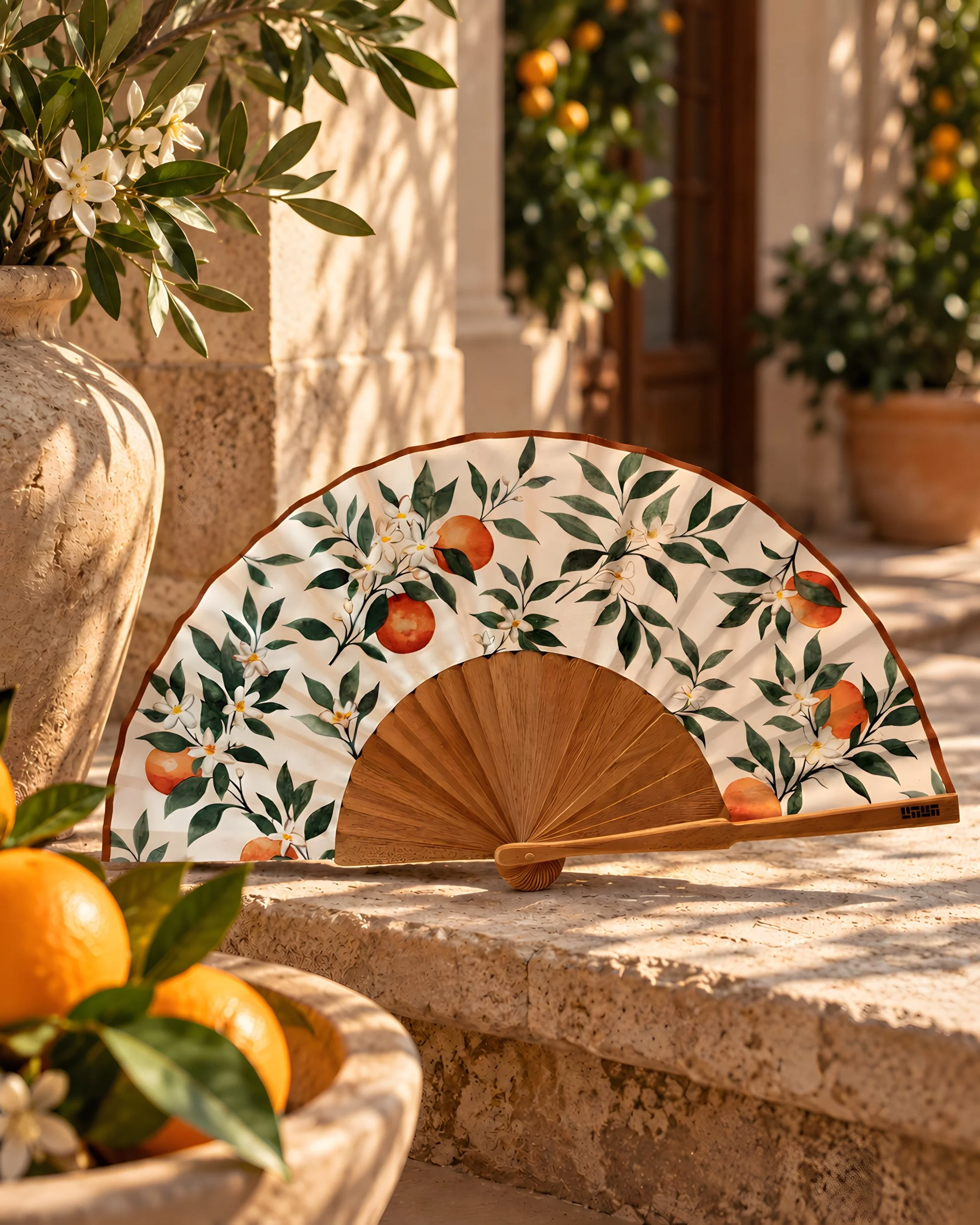
For a hand fan, the wood, fabric, folding movement, engraving and finishing details all contribute to the finished piece.
For a bag or guestroom accessory, dimensions, construction, seams and practical usability may require closer inspection.
Not every product needs the same sampling procedure. The important decision is what must be approved before production is committed.
It also helps to appoint a person responsible for approving specifications and changes, avoiding multiple versions of the same decision.
5. Two to three months before opening: confirm production
Production schedules should follow the necessary creative and technical approvals.
Once designs, quantities and finishes have been agreed, feasibility can be confirmed for each product reference.
Certain bespoke luxury hand fans may require approximately three to six weeks of production after final approval, depending on specifications and quantity.
A collection involving several categories, production partners, samples or specialist processes can require months of development and coordination.
The production time of one product should never be applied automatically to an entire collection.
Before confirming an order, review commercial terms, minimum quantities, packaging, quality-control arrangements and the expected completion date.
Where products are subject to regulatory requirements, these must be included in the schedule before delivery rather than left as a final check.
6. Before opening: coordinate shipping and receiving
Finished production does not mean the products are ready for guests.
Planning must also account for transport, import formalities where relevant, receiving procedures, quantity checks and storage.
The final delivery address and the person responsible for receiving the shipment should be confirmed.
During a hotel pre-opening period, access to certain areas may be restricted while construction, installation or operational preparation continues.
The operations team should therefore establish where cartons will arrive, when they can be accessed and how the products will be distributed before the first guests arrive.
It is equally useful to distinguish items required for opening day from those that can be introduced later without affecting service.
These decisions help prevent correctly manufactured products arriving at the wrong place or at an unsuitable time.
7. After opening: review usage and replenishment
Opening day does not always mark the end of a bespoke hospitality project.
Once the property is operating, real information becomes available about guest use, staff requirements, replenishment and practical performance.
An object developed for a single occasion may prove useful enough to become part of an ongoing programme.
Alternatively, an item initially intended for broad distribution may be better suited to a particular moment of the guest journey.
These observations can inform future quantities and production without losing the original creative direction.
Our selected projects illustrate different approaches to bespoke objects for hotels, destinations and other experiences.
Good opening preparation should support a confident first day while allowing the programme to evolve afterwards.
Frequently Asked Questions About Luxury Hotel Opening Amenities
When should a hotel begin planning bespoke opening amenities?
For a collection involving several product categories, planning should begin several months in advance. As a general guide, four to six months may allow time for creative development, sampling and production, although each project requires individual assessment.
Can a hotel commission hand fans only for its opening?
Yes. A complete collection is not necessary. A property may commission one signature piece for a welcome experience, special event or selected guests, subject to the project brief and quantities.
How long do bespoke luxury hand fans take to produce?
Certain bespoke luxury hand fans generally require approximately three to six weeks of production after final design approval. Creative development, sampling and shipping should be planned separately.
Can different hotel areas have their own bespoke pieces?
Yes. Depending on the brief, pieces can be considered for guestrooms, suites, pools, beaches, welcomes, events, travel and boutique retail. Functional requirements should be defined for each category.
Can Island Whisper Atelier coordinate projects internationally?
Yes. Island Whisper Atelier develops international projects. Shipping, import responsibilities, documentation and delivery dates are considered according to the destination and products involved.
Plan Your Hotel Opening With Us
If you are preparing a new hotel opening or rethinking the guest experience at an existing property, share the destination, anticipated opening date, required product categories and approximate project scope.
We can then assess the creative direction, technical requirements and a suitable development schedule.